
Natela Iankoshvili (born 1918 in Gurjaani, Georgia; died 2007 in Tbilisi) was a painter whose work stood in quiet but firm opposition to the ideological demands of Soviet art. Trained at the Tbilisi State Academy of Art, she rejected the pseudo-ethnographic, sexless depictions of female workers that dominated the era and instead painted images of motherhood, femininity and lived experience in a vibrant, deeply personal painterly language.
Her technique was physical and direct—heavy impasto, broad brushstrokes, passages of palette knife and a strong local colour that drew equally on the Georgian modernist tradition and the expressive freedom she encountered during travels to Cuba, Mexico and Italy. Those journeys produced some of her most celebrated bodies of work, including the graphic series Cuba and Svaneti, and reinforced her commitment to depicting a world that Soviet cultural life largely kept out of view. Iankoshvili was named People’s Artist of Georgia in 1976 and received the Shota Rustaveli Prize in 1995. She died in 2007, having willed her entire estate to the Natela Iankoshvili Museum in Tbilisi, founded in 2000. KORNFELD Galerie Berlin has been central to the international rediscovery of her work, presenting her first solo exhibition in Germany at the gallery in Berlin in 2012, and featuring her at Art Brussels in the Rediscovery Section (2017) and at Frieze New York in the SPOTLIGHT section (2018).


Natela Iankoshvili was born on 28 August 1918 in Gurjaani, in the Kakheti region of Georgia, and spent her entire life in her home country. She studied at the Tbilisi State Academy of Art from 1937 to 1943 under three of the most significant figures in Georgian modernism: Lado Gudiashvili, Davit Kakabadze and Sergo Kolubadze. From 1947 onwards she became a member of the Union of Artists and began exhibiting regularly across Georgia, the USSR and internationally.
Iankoshvili’s practice is rooted in the refusal to paint as instructed and in what becomes possible when an artist insists on her own terms across an entire lifetime. Her canvases are immediately recognisable: figures, portraits and landscapes emerging from near-black grounds with the luminous intensity of stained glass, their colour so concentrated that critics have consistently compared the effect to that of precious stones. Her brushwork carries echoes of Niko Pirosmani’s directness, the spiritual gravity of El Greco and the sensuous flatness of Paul Gauguin, yet the synthesis is entirely her own.
Her painting Black Madonna stands as one of the defining works of Georgian art—a radical assertion of female presence and spiritual authority that challenged both Soviet ideology and patriarchal convention. Travel proved equally formative: visits to Cuba, Mexico, Italy and France generated major bodies of graphic work and reinforced her commitment to depicting a world that lay beyond the narrow confines of official Soviet imagery.
KORNFELD Galerie Berlin has played a key role in bringing Natela Iankoshvili’s work to international attention, placing her practice within a broader reassessment of 20th-century women artists from Eastern Europe and the Caucasus.
-
atinati
NATELA IANKOSHVILIJune 24, 2024 -
post.moma
Fighting the Authoritarian Machine from the Inside: Tamar Abakelia and Natela IankoshviliJuly 12, 2023 -
ArtatBerlin
Alexander Adams + Natela Iankoshvili | Galerie KornfeldMay 26, 2021 -
e-flux
Wednesday Society. The Couch of Meret O.August 19, 2019 -
Georgia Today
The Spiritual Heir to Pirosmani: Natela Iankoshvili 100 YearsJune 14, 2018
-

Looking Back Ahead – Groupshow
2 Jul - 3 Sep 2022 KORNFELD GalerieTammam Azzam, Elvira Bach, Stéphane Couturier, Nick Dawes, Paris Giachoustidis, Hubertus Hamm, Natela Iankoshvili, Rusudan Khizanishvili, Franziska Klotz, Tamara Kvesitadze, Christopher Lehmpfuhl, David Meskhi, Susanne Roewer, Hubert Scheibl, Martin Spengler, Jan Tichy, Ivana de VivancoRead more
Galerie Kornfeld is delighted to announce it's ten year anniversary exhibition, wich will feature the artists that have come along with us through the decade. The anniversary exhibition will reveal touching glimpses of the past and the future, sensitive and exciting exchanges between first artistic attempts and more mature works. The works on show hint at inner struggle and transformation, the eternal search for what is hidden behind the visible. -
Natela Iankoshvili, Alexander Adams – The Day I Never Met You
26 Jun - 31 Jul 2021 KORNFELD GalerieThe two-artist exhibition: "The Day I Never Met You" at Galerie Kornfeld, Berlin brings together landscapes in spectacular colour and pinpoint detail. The explosive colour and dramatic brushwork of Georgian painter Natela Iankoshvili and the painstaking detail and anti-natural black and white of British artist Alexander Adams form a startling complementary pairing for the first time at the gallery. Bringing together two artists who have never had a chance to meet in person but over the years have continued to communicate through their work.Read more -
Christopher Lehmpfuhl & Natela Iankoshvili – Reise nach Georgien
26 Apr - 17 Jun 2018 KORNFELD GalerieGalerie Kornfeld is pleased to present a two-person exhibition of paintings from Natela Iankoshvili and Christopher Lehmpfuhl. This exhibition looks at Georgia as a site of inspiration for two strong artists coming from radically different positions: a contemporary male painter who was born and still lives in Berlin, Germany, works on the spot in a country he has never visited before, and paints there with his hands, en plein air. And a strong woman, who was born and lived in Georgia from 1918 to 2007, and who can be regarded as the most notable Georgian female artist of the 20th century, paints the landscapes of her home country in her own, unique style, with powerful brushstrokes set on a dark background.Read more -
Supper Club – Groupshow
14 Jan - 4 Mar 2017 KORNFELD GalerieStéphane Couturier, Hubertus Hamm, Bertram Hasenauer, Natela Iankoshvili, Franziska Klotz, Tamara Kvesitadze, Christopher Lempfuhl, Olivia Mc Gilchrist, Anne Pantillon, Sandeep Mukherjee, Alexander Polzin, Susanne Roewer, Sonny Sanjay VadgamaRead more
At a “Supper Club”, people who have generally never met before, get together in their host’s private rooms, where they are wined and dined with a self-prepared culinary menu. The idea of different people and cultures coming together through a shared interest is the inspiration for the group exhibition “Supper Club” that kick-starts the year 2017 at Galerie Kornfeld. We invited gallery artists, as well as exciting guest artists, to bring along one or two works as gifts for this exhibition, which unites a variety of artistic forms under one thematic framework. -
Natela Iankoshvili
16 Jun - 8 Sep 2012 KORNFELD GalerieGalerie Kornfeld’s first exhibition is dedicated Natela Iankoshvili (1918 – 2007). The painter is considered as the most significant Georgian artist of the 20th Century. Natela Iankoshvili studied at the Art Academy in Tbilisi and presented her work in numerous solo and group exhibitions in Georgia and the Soviet Union. She received several awards, including the Shota Rustaveli-Prize, the most prestigious art prize in Georgia. Her main themes were portraits and landscapes, whereby she developed an entirely new visual language. The works exhibited are from different phases, giving an overview of her oeuvre. Galerie Kornfeld will present the first solo exhibition of her work in Germany. A catalog of the exhibition will be published by Kehrer Verlag.Read more


-
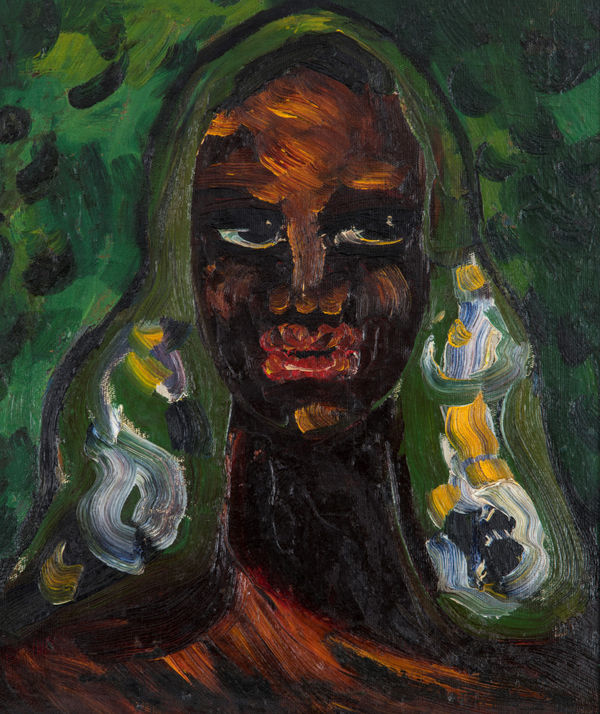
Frieze New York 2021
New York, USA 5 - 25 May 2021Galerie KORNFELD at Frieze New York 2021, Natela IankoshviliRead more -
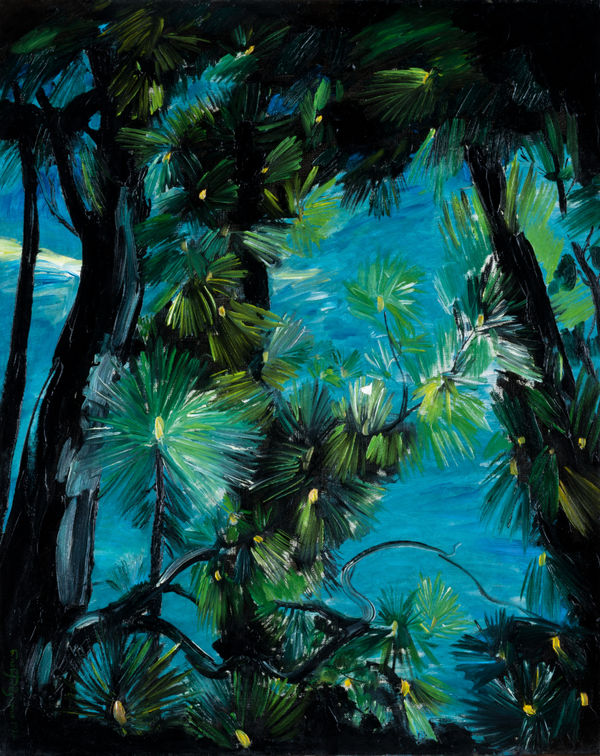
Tbilisi Art Fair 2018
Tbilisi, Georgia 17 - 20 May 2018Galerie KORNFELD at Tbilisi Art Fair 2018, Natela IankoshviliRead more -
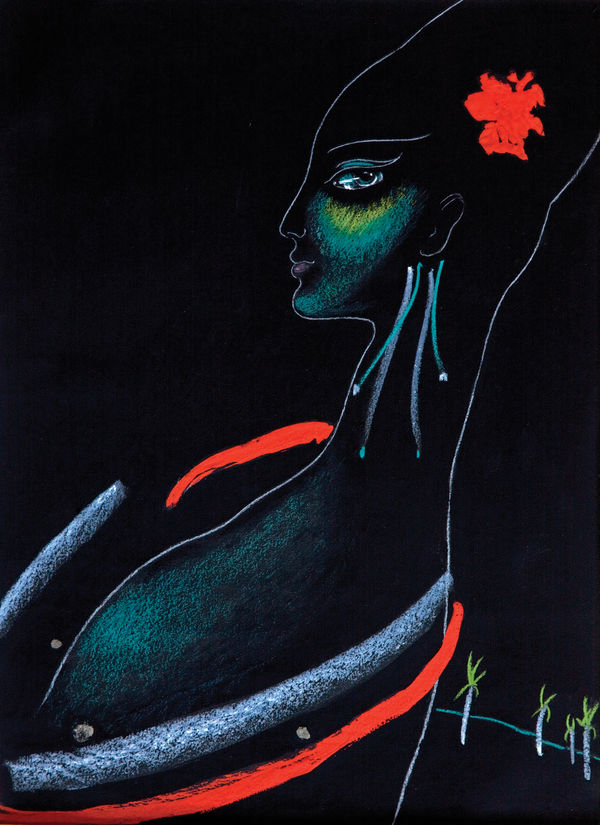
Frieze New York 2018
New York, USA 3 - 7 May 2018Galerie KORNFELD at Frieze New York 2018, Natela IankoshviliRead more -

Art Brussels 2017
Brussels, Belgium 21 - 23 Apr 2017Galerie KORNFELD at Art Brussels 2017, Natela IankoshviliRead more -
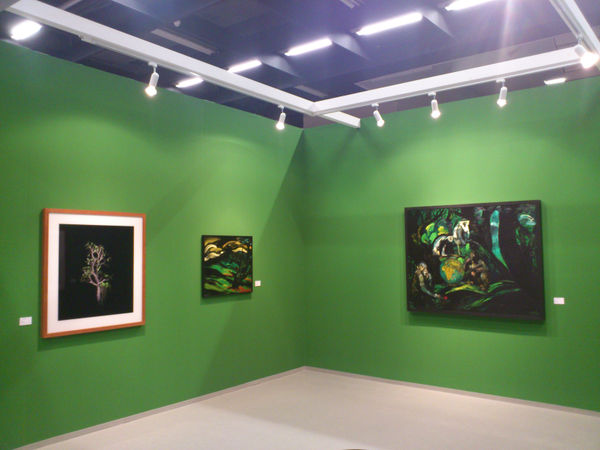
Cologne Fine Art 2014
Cologne, Germany 19 - 23 Nov 2014Galerie KORNFELD at Cologne Fine Art 2014, Natela IankoshviliRead more