
Tammam Azzam (born 1980 in Damascus, Syria) is a Berlin-based painter and collage artist whose work explores memory, architecture and cultural loss. Working across painting, paper collage and mixed media, he has developed a visual language grounded in fragmentation: tearing, layering and reconstructing materials to reflect both the aesthetics of destruction and the persistence of what endures. Azzam studied oil painting at the Faculty of Fine Arts at the University of Damascus, graduating in 2001, and later deepened his practice through advanced workshops with the German-Syrian painter Marwan in Amman, Jordan.
Azzam gained wide international recognition with his 2013 series The Syrian Museum, in which digitally composited European masterworks—including Gustav Klimt’s The Kiss—are superimposed onto photographs of bombed Syrian buildings. These images circulated globally and prompted urgent conversations about cultural erasure, war and the politics of visibility. Since relocating to Germany in 2016, his practice has shifted toward an expansive body of paper-based works that investigate fragility, accumulation and the unfinished as an aesthetic condition. His works are held in major public and private collections across Europe, the Middle East and the United States. Tammam Azzam is represented by KORNFELD Galerie Berlin, where he has been the subject of multiple solo exhibitions.
-

-
-
-
-
-
-
-
-
-
-
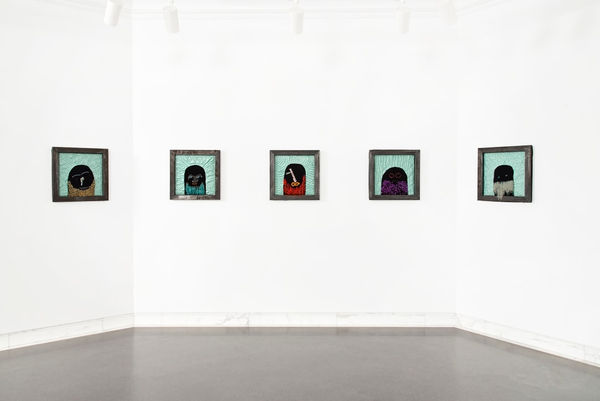
Untitled, 2024 Sold


Tammam Azzam (born 1980 in Damascus, Syria) grew up in the village of Ta'ara in the country’s south. He received his formal artistic training at the Faculty of Fine Arts at the University of Damascus, specialising in oil painting and graduating in 2001. From 2001 to 2003 he took part in advanced workshops in Amman, Jordan, led by the German Syrian painter Marwan Kassab Bachi. These sessions sharpened Azzam’s understanding of painting as a medium capable of carrying historical weight and emotional complexity. Alongside his studio practice, he worked as a graphic designer in Syria, a background that would later inform the visual precision and compositional clarity of his digital photomontage works.
Azzam’s practice is grounded in the relationship between places and their undoing: how architecture holds memory, and what remains when both are destroyed. Moving between painting, paper collage and mixed media, he returns consistently to themes of fragmentation, accumulation and the aesthetics of the unfinished. His landmark series The Syrian Museum (2012–2013) brought him international recognition by digitally superimposing canonical European paintings, including Gustav Klimt’s The Kiss and works by Goya and Magritte, onto photographs of devastated Syrian buildings. Circulating widely online and in the press, these images generated sustained critical discussion around cultural memory and the Syrian conflict.
Since relocating to Germany in 2016, Azzam has developed an extensive body of collage works using prepared coloured paper, in which tearing, layering and reconstruction function as both method and metaphor. More recent paintings and collages examine the fragility of built environments and the slow accumulation of time on material surfaces, extending his inquiry into how loss is registered visually.
Azzam’s work is held in significant public and private collections across Europe, the Middle East and the United States. In 2016 he was a fellow at the Hanse Wissenschaftskolleg, Institute for Advanced Study, in Delmenhorst, Germany. His practice has been the subject of a major monograph, Bilder ohne Namen / Untitled Pictures, published by Hirmer Verlag in 2021.
His exhibition history spans continents and institutional contexts. Azzam has participated in the Vancouver Biennale, where he was artist in residence; the FotoFest Biennial in Houston; the Dak’Art Biennial of Contemporary African Art in Dakar; the Alexandria Biennale; the 30th Biennial of Graphic Arts in Ljubljana; and Banksy’s Dismaland in Weston super Mare (2015). Solo and group exhibitions have been presented at the Aga Khan Museum in Toronto; the Middle East Institute in Washington, D.C. (2021); the Rudolf Stolz Museum in Sexten, South Tyrol (2020); the Busan Museum of Art; the Fondazione Giorgio Cini in Venice; Framer Framed in Amsterdam; Columbia University in New York; the For Site Foundation in San Francisco; and the Künstlerforum Bonn, among many others.
Tammam Azzam has been represented by KORNFELD Galerie Berlin for many years, with the gallery providing a consistent platform for the development of his work. Solo and duo exhibitions at KORNFELD Galerie Berlin include Bilder ohne Namen / Untitled Pictures (2021), Temporary Title (2023–2024) and Fragments (2022), a duo exhibition with Jonas Englert in which Azzam’s large scale paper collages were shown in dialogue with Englert’s video works. The gallery has also presented Azzam’s work at international art fairs, including Art Dubai and Untitled Art in Miami Beach, contributing to his growing visibility within the global contemporary art context.
Azzam continues to live and work in Berlin, where his practice moves between the intimacy of paper collage and the monumental scale of painting, always returning to the question of what endures and what art can hold in the aftermath of loss.
-
Aljumhuriya
How Syrian Artists Captured Liberation, Memory and ReturnAugust 12, 2025 -
canvas
Interview: Tammam AzzamApril 3, 2024 -
Annas News
"Fragments" by Syrian artist Tammam Azzam are restoring the world!October 4, 2022 -
Deeds
Art Talk “Heimat finden mit Kunst” – Galerie KornfeldAugust 20, 2022 -
Arab News
Highlights from Tammam Azzam’s works on show at Art DubaiMarch 31, 2022 -
Artforum
Critics' Picks – Tammam AzzamSeptember 4, 2019 -
Monopol
Syrischer Künstler malt Zerstörung seiner Heimat Der Weg aus den TrümmernDecember 12, 2015 -
The Independent
The Syrian artist who superimposes Western masterpieces onto bombed buildingsSeptember 8, 2015 -
CNN
Syrian artist’s vision of love amid devastation of war goes viralFebruary 6, 2013 -
The New York Times
Haunted by War, Syrian Artists Put Raw Emotions on ViewFebruary 6, 2013
-
Tammam Azzam – Aftermath
30 Apr - 7 Jun 2025 KORNFELD GalerieTammam Azzam’s solo exhibition Aftermath features a new series of watercolors that explore destruction and its lasting traces. The artist's work focuses on urban landscapes that have been disfigured by war and violence. His cityscapes appear as fragile skeletons, ruins of once-vibrant places. With delicate lines and striking color accents, he creates compelling compositions that reflect not only Syria but also the universal consequences of armed conflict. Balancing documentary precision with painterly abstraction, his works reveal the scars of destruction and the silence that follows.Read more
Photos by Andrea Katheder -
Tammam Azzam – Temporary Title
18 Nov 2023 - 6 Jan 2024 KORNFELD GalerieWe are pleased to present new works by Syrian artist Tammam Azzam, Berlin-based, in the exhibition “Temporary Title”. Guided by a universal humanity, his pictorial collages find artistic expression for the unrelenting suffering that people experience through unexpected attacks or wars by tyrannical rulers in the past, present and future. Creativity in the midst of fragmentation. The English expression “temporary title”, with which the artist titled his exhibition, is one meaning of the Arabic expression “al-‘unwan al-mu’aqqat”. The phrase also translates to “temporary address“, referring to the homelessness experienced by people who have been forced to leave their homes due to terror, war or famine.Read more -
Tammam Azzam, Jonas Englert – Fragments
10 Sep - 29 Oct 2022 KORNFELD GalerieGalerie Kornfeld is pleased to present the works of Tammam Azzam and Jonas Englert in the duo exhibition “Fragments”. Both artists dwell on the rebuild or the re-contextualisation of political moments through history.Read more
The exhibition challenges the way political decisions are made and the outcome of them. How these settlements, arrangements, threats, treaties and agreements take place and how they are definitive in the change of history, how they impact not only the current population but generations to come, and to question the authenticity of the diplomatic gestures that lead to defining moments in our times.
Through both artists exhibited we can sense how society deals with political agreements, disagreements and decisions being done. In Englert’s work we see this through fragments of video compositions showcasing the diplomacy of political gestures whereas in Azzam’s work we see this through large-scale paper collages that depict the broken end result of a conflict or dispute. -
Looking Back Ahead – Groupshow
2 Jul - 3 Sep 2022 KORNFELD GalerieTammam Azzam, Elvira Bach, Stéphane Couturier, Nick Dawes, Paris Giachoustidis, Hubertus Hamm, Natela Iankoshvili, Rusudan Khizanishvili, Franziska Klotz, Tamara Kvesitadze, Christopher Lehmpfuhl, David Meskhi, Susanne Roewer, Hubert Scheibl, Martin Spengler, Jan Tichy, Ivana de VivancoRead more
Galerie Kornfeld is delighted to announce it's ten year anniversary exhibition, wich will feature the artists that have come along with us through the decade. The anniversary exhibition will reveal touching glimpses of the past and the future, sensitive and exciting exchanges between first artistic attempts and more mature works. The works on show hint at inner struggle and transformation, the eternal search for what is hidden behind the visible. -
Tammam Azzam – Bilder ohne Namen
29 Apr - 19 Jun 2021 KORNFELD GalerieAn aesthetic experience is not an appeal, and a picture is not political agitation. But l’art pour l’art, art just for art’s sake, is not enough for Tammam Azzam. His works inspire usto think about ourselves and about the world in which we live. They pose questions, but they don’t give any answers. What we think, see, feel is left upto us. Those who find references to the situation in Tammam Azzam’s homecountry are free to do so. Tammam Azzam himself sees the events in Syria since 2011 as symbolic for the state of our world at the beginning of thetwenty-first century. He uses art to address the urgent questions of our times, such as war, violence, migration, destruction, and construction; finding images that aim directly at our emotions and burn themselves into our memory.Read more -
Ab- und Zusagen | Gedanken eines Galeristen – Groupshow
1 May - 20 Jun 2020 68projectsHiba Alansari, Tammam Azzam, Stéphane Couturier, Nick Dawes, Farshad Farzankia, Hubertus Hamm, Rusudan Khizanishvili, Vera PagavaRead more
Shutdown. Lockdown. Confirmations. Cancellations.
That might happen from time to time, the gallerist thinks. Occasionally an artist or a collector might cancel. This time, however, it's a collective, worldwide cancellation. And he tries to understand current events, just as the friends of art seek to read and interpret images. And the gallerist thinks. Cancel? Confirm? He thinks: These extraordinary times offer us the opportunity to pause momentarily, to reflect on what really matters, to feel what is taking place and to become aware of the consequences. At least from time to time. -
Tammam Azzam
14 Sep - 29 Oct 2018 KORNFELD GalerieTammam Azzam first gained attention in 2013 when he was forced to leave his studio in Syria and began making digital photomontages in his new home in Dubai. These works take an unromantic look at the conflict within art making in the face of war and violence, directly addressing the on-going conflict in his home country. One of these works shows an image of Gustav Klimt’s “The Kiss” superimposed on a bombed Syrian building . This work went viral on Social Media, and even today is among the most well known works of the artist.Read more
Following these experiences, Tammam Azzam found his way back to painting, but in a different register. With “Storeys”, a series of monumental acrylic paintings depicting the magnitude of devastation in his home country through expressionist compositions of destroyed cityscapes, the artist chronicles the current state of his country in a cathartic exercise of reconstruction, storey by storey.



-

Art Cologne 2026
Cologne, Germany 5 - 8 Nov 2026KORNFELD Galerie returns to ART COLOGNE with works by Tammam Azzam, Nick Dawes, Dieter Jung, Simin Jalilian, Franziska Klotz, Valentina Murabito, Shanee Roe and Martin...Read more -

Art Düsseldorf 2026
Düsseldorf, Germany 17 - 19 Apr 2026Image Spaces of Exile and Self‑Determination Images begin where words end. In a time marked by conflict, displacement, and shifting identities, the exhibition explores how...Read more -
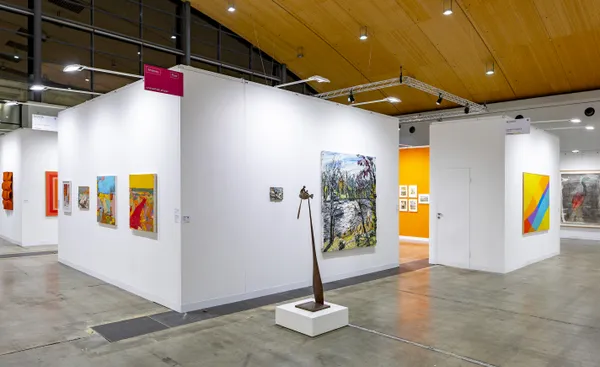
Art Karlsruhe 2026
Karlsruhe, Germany 5 - 8 Feb 2026KORNFELD Galerie at Art Karlsruhe 2026, Tammam Azzam, Etsu Egami, Jay Gard, Dieter Jung, Simin Jalilian, Christopher Lehmpfuhl, Shanee Roe, Martin SpenglerRead more -
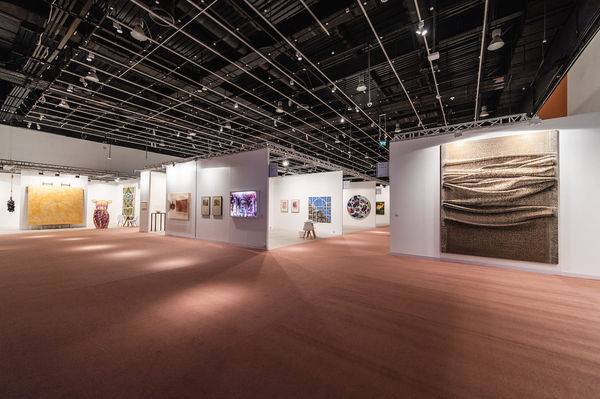
Abu Dhabi Art 2025
Abu Dhabi, UAE 19 - 24 Nov 2025Galerie KORNFELD at Abu Dhabi Art 2025, Yasaman Nozari, Simin Jalilian, Tammam AzzamRead more -
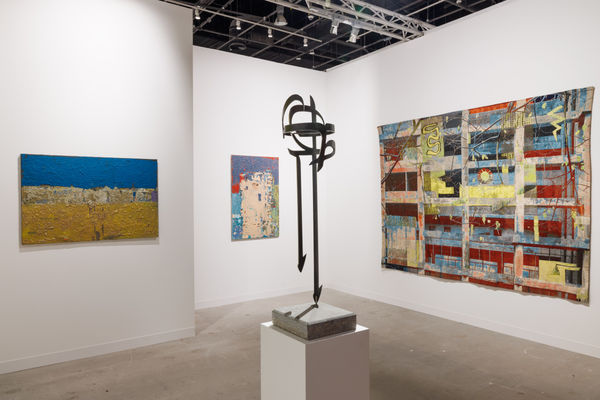
Abu Dhabi Art 2024
Abu Dhabi, UAE 20 - 24 Nov 2024Galerie KORNFELD at Abu Dhabi Art 2024, Tammam Azzam, Stéphane CouturierRead more -
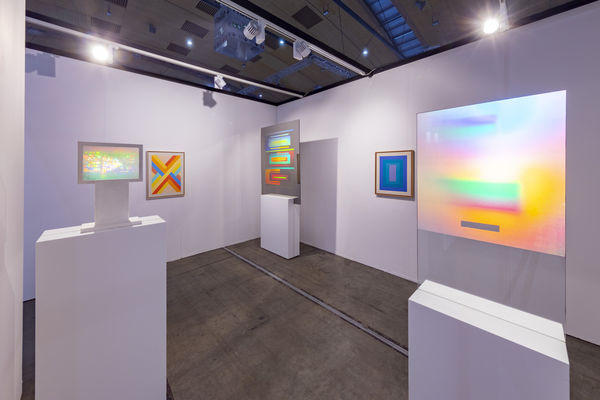
Art Karlsruhe 2024
Karlsruhe, Germany 21 - 25 Feb 2024Galerie KORNFELD at Art Karlsruhe 2024, Tammam Azzam, Jay Gard, Dieter Jung, Lena Keller, Christopher Lehmpfuhl, Martin SpenglerRead more -
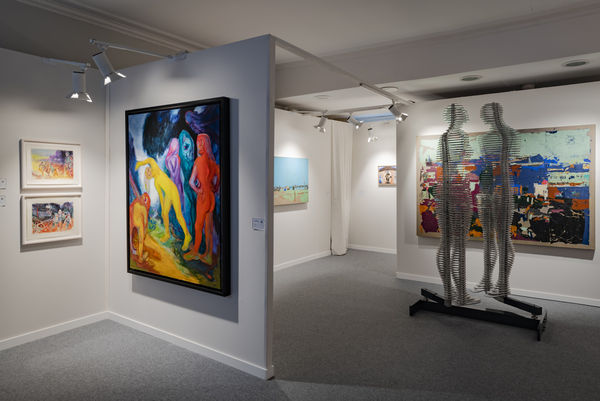
Asia Now Paris 2023
Paris, France 20 - 22 Oct 2023Galerie KORNFELD at Asia Now Paris 2023, Tammam Azzam, Rao Fu, Tamara Kvesitadze, Youjin YiRead more -
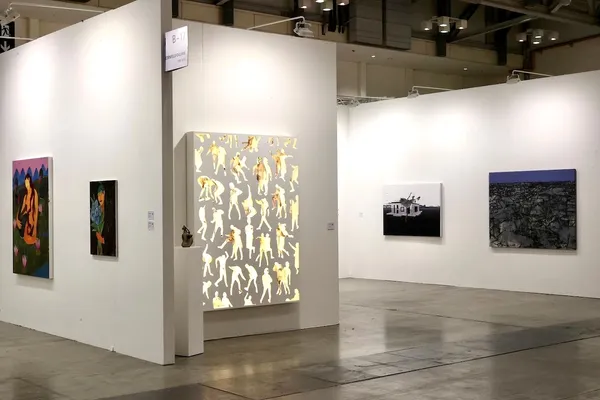
Art Busan 2023
Busan, South Korea 4 - 7 May 2023Galerie KORNFELD at Art Busan 2023, Tammam Azzam, Lena Keller, Rusudan Khizanishvili, Seong Joon Hong, Franziska Klotz, Tamara Kvesitadze, Nashun NashunbatuRead more -
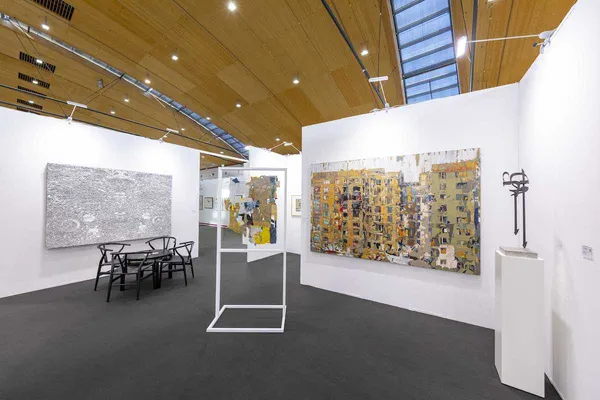
Art Karlsruhe 2023
Karlsruhe, Germany 3 - 7 May 2023Galerie KORNFELD at Art Karlsruhe 2023, Tammam Azzam, Lena Keller, Tamara Kvesitadze, Christopher Lehmpfuhl, Martin SpenglerRead more -

ARCO Madrid 2023
Madrid, Spain 22 - 26 Feb 2023Galerie KORNFELD at ARCO Madrid 2023, Tammam Azzam, Daniel Canogar, Ivana de Vivanco, Jonas Englert, Amparo Sard, Peter WeibelRead more -

KIAF Seoul 2022
Seoul, South Korea 2 - 6 Sep 2022Galerie KORNFELD at KIAF Seoul 2022, Tammam Azzam, Paris Giachoustidis, Rusudan Khizanishvili, Tamara Kvesitadze, Bruce McLean, Nashun NashunbatuRead more -
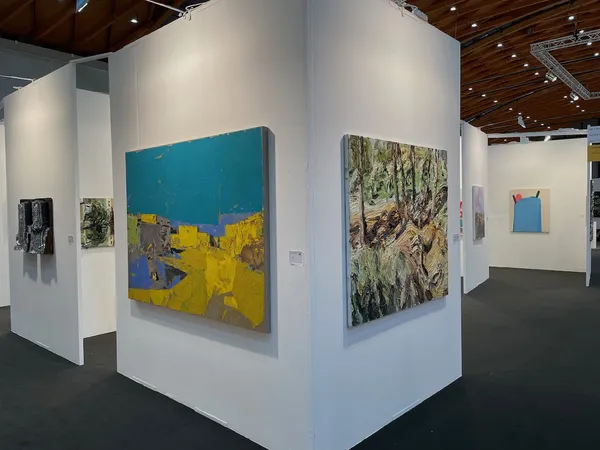
Art Karlsruhe 2022
Karlsruhe, Germany 6 - 10 Jul 2022Galerie KORNFELD at Art Karlsruhe 2022, Tammam Azzam, Nick Dawes, Tamara Kvesitadze, Christopher Lehmpfuhl, Martin SpenglerRead more -

Art Dubai 2022
Dubai, UAE 11 - 13 Mar 2022Galerie KORNFELD at Art Dubai 2022, Tammam Azzam, Daniel Canogar, Nick Dawes, Tamara Kvesitadze, Chunqing HuangRead more -
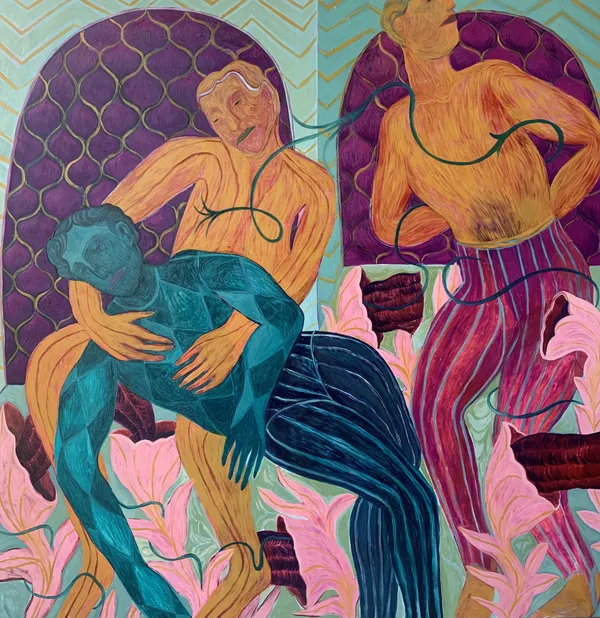
Expo Chicago 2021
Chicago, USA 7 - 12 Apr 2021Galerie KORNFELD at Expo Chicago 2021, Tammam Azzam, Nick Dawes, Rusudan KhizanishviliRead more -
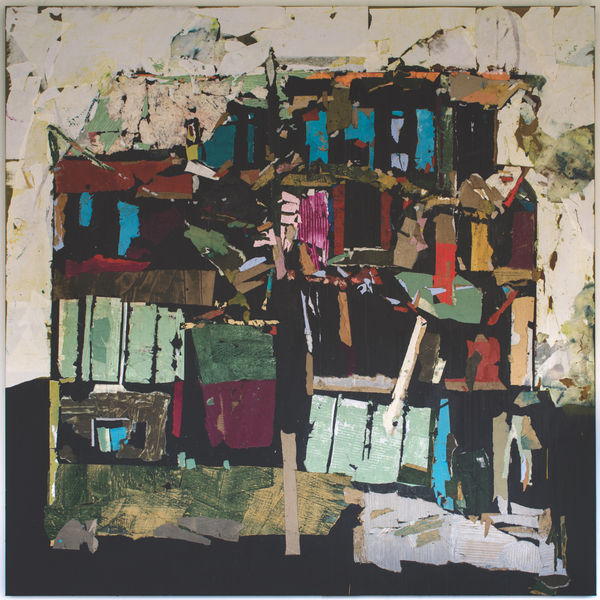
Art Dubai 2018
Dubai, UAE 20 - 24 Mar 2018Galerie KORNFELD at Art Dubai 2018, Tammam AzzamRead more